


Introduction to Bhagavad Gita in Odia (Oriya)
The Bhagavad Gita, often called the Song of God, is one of the world’s most respected spiritual scriptures. It is a timeless conversation between Lord Krishna and Arjuna, spoken on the battlefield of Kurukshetra just before the Mahabharata war. Through 18 chapters and 700 verses, the Gita explains the principles of dharma (duty), karma (action), devotion, knowledge, and self-realization.
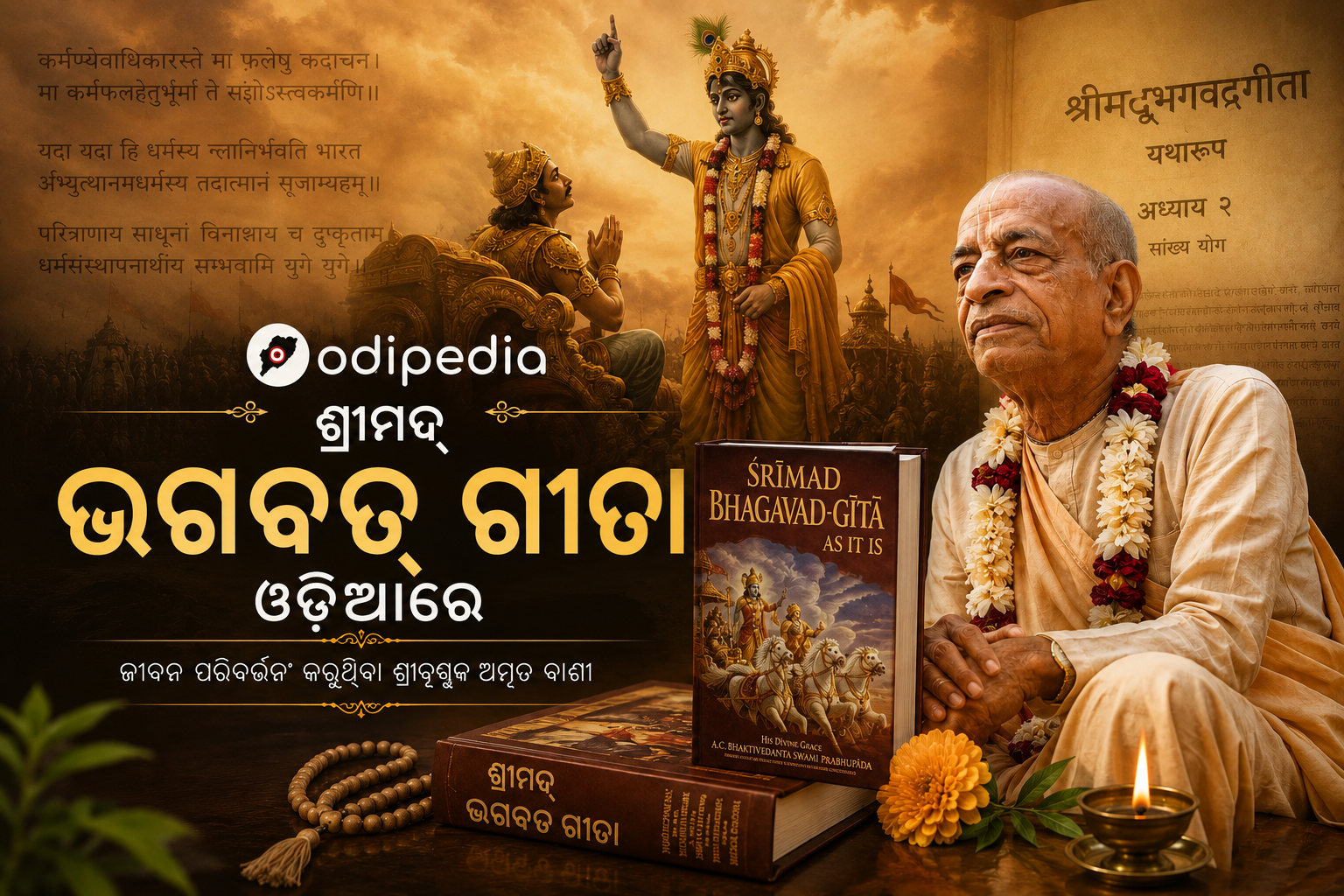
On Odipedia, we present the complete Bhagavad Gita in Odia (Oriya) with:
- Original Sanskrit verses
- IAST transliteration
- Odia meaning
- Hindi translation
- English translation
- Chapter-wise navigation
- Verse-wise navigation
Whether you are reading the Gita for the first time, studying a specific verse, or seeking spiritual guidance, this page is designed to make the teachings of Lord Krishna accessible in a simple and structured way.
What You Will Find
Complete Bhagavad Gita
18 Chapters
700 Verses
Sanskrit Shlokas
Odia Meaning
Hindi Translation
English Translation
IAST Transliteration
Chapter-wise Reading
Verse-wise Navigation
About the Bhagavad Gita
The Bhagavad Gita is a sacred section of the Mahabharata and consists of 18 chapters and 700 verses. It presents the dialogue between Lord Krishna and Arjuna at a moment of deep moral and emotional conflict, addressing questions about duty, righteousness, devotion, knowledge, and the nature of the self. Its teachings continue to guide people across cultures and generations. For more details please read Odipedia Bhagavad Gita Scene Chapter and Introduction to Bhagavad Gita
Who spoke how many verses?
| Speaker | Verses |
|---|---|
| Lord Krishna | 574 |
| Arjuna | 84 |
| Sanjaya | 41 |
| Dhritarashtra | 1 |
| Total | 700 |
When was it spoken?
According to the traditional Hindu understanding:
- The Bhagavad Gita was spoken around 5,000 years ago, just before the start of the Mahabharata war, traditionally dated to around 3100 BCE (often cited around 3138–3102 BCE).
From the perspective of modern historical scholarship:
- The text is generally believed to have been composed between the 2nd century BCE and 2nd century CE as part of the Mahabharata.
These represent two different ways of dating the text: the traditional religious view and the academic historical view.
Who wrote the Bhagavad Gita?
The Bhagavad Gita is a part of the Mahabharata, one of the great Sanskrit epics of India.
The Mahabharata is traditionally attributed to Sage Vyasa, also known as Veda Vyasa, who is regarded as its compiler.
The Bhagavad Gita records the dialogue between Lord Krishna and Arjuna on the battlefield of Kurukshetra. Within the Mahabharata, this dialogue is narrated by Sanjaya to King Dhritarashtra, who receives a divine vision that enables him to witness and describe the events of the battlefield.
Odipedia | Bhagavad Gita Master Reference Table |
|||||
| Ch. | Sanskrit Name | English Name | Verses | Primary Theme | Main Objective |
| 1 | Arjuna Viṣāda Yoga | The Yoga of Arjuna’s Despair | 46 | Despair & Moral Dilemma | Understand Arjuna’s confusion, fear, attachment, and moral conflict before the battle, setting the stage for Krishna’s teachings. |
| 2 | Sāṅkhya Yoga | The Yoga of Knowledge | 72 | Self-Knowledge | Learn the difference between the eternal soul (Ātman) and temporary body, understand duty, and receive the introduction to Karma Yoga. |
| 3 | Karma Yoga | The Yoga of Selfless Action | 43 | Action | Perform prescribed duties without attachment to results and dedicate all actions to God. |
| 4 | Jñāna-Karma-Sannyāsa Yoga | The Yoga of Knowledge and Renunciation of Action | 42 | Divine Knowledge | Understand Krishna’s divine appearance, transcendental knowledge, and how wisdom purifies all actions. |
| 5 | Karma-Sannyāsa Yoga | The Yoga of Renunciation | 29 | Renunciation | Learn that true renunciation means giving up attachment to results while continuing one’s prescribed duties. |
| 6 | Dhyāna (Ātma-Saṁyama) Yoga | The Yoga of Meditation | 47 | Meditation | Learn mind control, self-discipline, meditation, and the qualities of an accomplished yogi. |
| 7 | Jñāna-Vijñāna Yoga | The Yoga of Knowledge and Realization | 30 | Knowing God | Understand Krishna’s material and spiritual energies and realize Him as the Supreme Personality of Godhead. |
| 8 | Akṣara-Brahma Yoga | The Yoga of the Imperishable Absolute | 28 | Death & Liberation | Learn what happens at death, the importance of remembering Krishna, and the path to the eternal destination. |
| 9 | Rāja-Vidyā Rāja-Guhya Yoga | The Yoga of the King of Knowledge and the King of Secrets | 34 | Pure Devotion | Receive the most confidential knowledge—that loving devotional service (Bhakti) is the highest spiritual path. |
| 10 | Vibhūti Yoga | The Yoga of Divine Glories | 42 | Divine Manifestations | Recognize Krishna’s greatness through His opulences and manifestations throughout creation. |
| 11 | Viśvarūpa-Darśana Yoga | The Yoga of the Universal Form | 55 | Universal Vision | Witness Krishna’s cosmic universal form and understand His supreme authority over time and creation. |
| 12 | Bhakti Yoga | The Yoga of Devotion | 20 | Devotion | Learn the process of loving devotional service and the qualities of Krishna’s dear devotees. |
| 13 | Kṣetra-Kṣetrajña Vibhāga Yoga | The Yoga of the Field and the Knower of the Field | 35 | Body & Soul | Distinguish between the body (Kṣetra), the soul (Kṣetrajña), material nature, and the Supreme Soul. |
| 14 | Guṇa-Traya-Vibhāga Yoga | The Yoga of the Three Modes of Nature | 27 | Three Gunas | Understand Sattva, Rajas, and Tamas, and learn how to rise above material nature through devotion. |
| 15 | Puruṣottama Yoga | The Yoga of the Supreme Person | 20 | Supreme Reality | Understand the material world, the eternal soul, and Krishna as the Supreme Person (Puruṣottama). |
| 16 | Daivāsura-Sampad-Vibhāga Yoga | The Yoga of Divine and Demoniac Qualities | 24 | Character | Learn the divine qualities that lead to liberation and the demoniac qualities that lead to bondage. |
| 17 | Śraddhā-Traya-Vibhāga Yoga | The Yoga of the Three Types of Faith | 28 | Faith | Understand how faith, food, charity, sacrifice, and austerity are influenced by the three modes of nature. |
| 18 | Mokṣa-Sannyāsa Yoga | The Yoga of Liberation and Renunciation | 78 | Liberation | The complete summary of the Bhagavad Gita—duty, knowledge, action, devotion, surrender, and attaining liberation through Krishna. |
| Total | 18 Chapters | Bhagavad Gita | 700 | Complete Guide to Life | A comprehensive guide to self-realization, righteous living, devotion to God, and attaining liberation (Moksha). |
Read Bhagavad Gita in Odia, English and Hindi Chapter and Verse Wise
| Chapter | Name |
|---|---|
| Chapter 1 | Arjuna Vishada Yoga |
| Chapter 2 | Sankhya Yoga |
| Chapter 3 | Karma Yoga |
| Chapter 4 | Jnana Karma Sanyasa Yoga |
| Chapter 5 | Karma Sanyasa Yoga |
| Chapter 6 | Dhyana (Atma Samyama) Yoga |
| Chapter 7 | Jnana Vijnana Yoga |
| Chapter 8 | Akshara Brahma Yoga |
| Chapter 9 | Raja Vidya Raja Guhya Yoga |
| Chapter 10 | Vibhuti Yoga |
| Chapter 11 | Vishvarupa Darshana Yoga |
| Chapter 12 | Bhakti Yoga |
| Chapter 13 | Kshetra Kshetrajna Vibhaga Yoga |
| Chapter 14 | Gunatraya Vibhaga Yoga |
| Chapter 15 | Purushottama Yoga |
| Chapter 16 | Daivasura Sampad Vibhaga Yoga |
| Chapter 17 | Shraddha Traya Vibhaga Yoga |
| Chapter 18 | Moksha Sanyasa Yoga |
Why Read the Bhagavad Gita?
People turn to the Bhagavad Gita to understand:
- The purpose of life
- Duty and responsibility
- Karma and its results
- Devotion to God
- Meditation and self-control
- Inner peace
- Decision making
- Leadership
- Spiritual wisdom
Its teachings remain relevant because they address timeless human questions while encouraging thoughtful action and inner growth.
Three verses every human should know
1. Focus on your duty (Karma Yoga)
Chapter 2, Verse 47
कर्मण्येवाधिकारस्ते मा फलेषु कदाचन।
मा कर्मफलहेतुर्भूर्मा ते सङ्गोऽस्त्वकर्मणि॥
Meaning:
You have the right to perform your duty, but not to the fruits of your actions. Never let results alone be your motive, and never become attached to inaction.
Life lesson: Do your best. Leave the outcome to God and time.
୧. ନିଜ କର୍ତ୍ତବ୍ୟ କର (କର୍ମଯୋଗ)
ଭଗବଦ୍ ଗୀତା – ଅଧ୍ୟାୟ ୨, ଶ୍ଲୋକ ୪୭
କର୍ମଣ୍ୟେବାଧିକାରସ୍ତେ ମା ଫଳେଷୁ କଦାଚନ।
ମା କର୍ମଫଳହେତୁର୍ଭୂର୍ମା ତେ ସଙ୍ଗୋ’ସ୍ତ୍ୱକର୍ମଣି॥
ଅର୍ଥ (ଓଡ଼ିଆ)
ତୁମର ଅଧିକାର କେବଳ ନିଜ କର୍ତ୍ତବ୍ୟ କରିବାରେ ଅଛି, ତାହାର ଫଳ ଉପରେ ନୁହେଁ। କର୍ମର ଫଳକୁ ଲକ୍ଷ୍ୟ କରି କାମ କରିବା ଉଚିତ୍ ନୁହେଁ, ଏବଂ ଫଳର ଆଶାରେ କର୍ମ ଛାଡ଼ି ଦେବା ମଧ୍ୟ ଉଚିତ୍ ନୁହେଁ।
ଜୀବନ ଶିକ୍ଷା
ନିଜ କର୍ତ୍ତବ୍ୟକୁ ନିଷ୍ଠାର ସହିତ କର। ଫଳର ଚିନ୍ତା ନକରି ଭଗବାନଙ୍କ ଉପରେ ବିଶ୍ୱାସ ରଖ।
********************************************************************************
2. Whenever righteousness declines
Chapter 4, Verse 7
यदा यदा हि धर्मस्य ग्लानिर्भवति भारत।
अभ्युत्थानमधर्मस्य तदात्मानं सृजाम्यहम्॥
Meaning:
Whenever righteousness declines and unrighteousness rises, I manifest Myself.
Life lesson: Truth and righteousness ultimately prevail.
୨. ଧର୍ମର ସୁରକ୍ଷା ପାଇଁ ଭଗବାନଙ୍କ ଅବତାର
ଭଗବଦ୍ ଗୀତା – ଅଧ୍ୟାୟ ୪, ଶ୍ଲୋକ ୭
ଯଦା ଯଦା ହି ଧର୍ମସ୍ୟ ଗ୍ଲାନିର୍ଭବତି ଭାରତ।
ଅଭ୍ୟୁତ୍ଥାନମଧର୍ମସ୍ୟ ତଦାତ୍ମାନଂ ସୃଜାମ୍ୟହମ୍॥
ଅର୍ଥ (ଓଡ଼ିଆ)
ହେ ଭାରତ! ଯେତେବେଳେ ଧର୍ମର ଅବନତି ହୁଏ ଏବଂ ଅଧର୍ମର ପ୍ରଭାବ ବଢ଼ିଯାଏ, ସେତେବେଳେ ମୁଁ ନିଜେ ଅବତାର ଗ୍ରହଣ କରେ।
ଜୀବନ ଶିକ୍ଷା
ସତ୍ୟ ଓ ଧର୍ମ କେବେ ପରାଜିତ ହୁଏ ନାହିଁ। ଶେଷରେ ସତ୍ୟର ହିଁ ବିଜୟ ହୁଏ।
********************************************************************************
3. Surrender with faith
Chapter 18, Verse 66
सर्वधर्मान्परित्यज्य मामेकं शरणं व्रज।
अहं त्वां सर्वपापेभ्यो मोक्षयिष्यामि मा शुचः॥
Meaning:
Abandon all varieties of duty and simply surrender unto Me. I shall free you from all sinful reactions. Do not fear.
Life lesson: Trust God completely; surrender brings peace and liberation.
୩. ସମ୍ପୂର୍ଣ୍ଣ ଶରଣାଗତି
ଭଗବଦ୍ ଗୀତା – ଅଧ୍ୟାୟ ୧୮, ଶ୍ଲୋକ ୬୬
ସର୍ବଧର୍ମାନ୍ ପରିତ୍ୟଜ୍ୟ ମାମେକଂ ଶରଣଂ ବ୍ରଜ।
ଅହଂ ତ୍ୱାଂ ସର୍ବପାପେଭ୍ୟୋ ମୋକ୍ଷୟିଷ୍ୟାମି ମା ଶୁଚଃ॥
ଅର୍ଥ (ଓଡ଼ିଆ)
ସମସ୍ତ ପ୍ରକାରର ଧର୍ମ ଓ ଆଶ୍ରୟକୁ ଛାଡ଼ି କେବଳ ମୋର ଶରଣ ଗ୍ରହଣ କର। ମୁଁ ତୁମକୁ ସମସ୍ତ ପାପରୁ ମୁକ୍ତ କରିଦେବି। କୌଣସି ଭୟ କିମ୍ବା ଶୋକ କରନି।
ଜୀବନ ଶିକ୍ଷା
ଭଗବାନ ଶ୍ରୀକୃଷ୍ଣଙ୍କ ଉପରେ ସମ୍ପୂର୍ଣ୍ଣ ବିଶ୍ୱାସ ଓ ଶରଣାଗତି ହିଁ ଜୀବନର ପ୍ରକୃତ ଶାନ୍ତି ଓ ମୁକ୍ତିର ପଥ।
********************************************************************************
Why Read on Odipedia?
Unlike many websites that provide only one language, Odipedia brings together multiple formats in one place.
Every verse includes:
- Sanskrit
- Transliteration
- Odia
- Hindi
- English
This allows students, devotees, teachers, and readers from different backgrounds to study the Bhagavad Gita side by side without switching between websites.
Frequently Asked Questions
What is the Bhagavad Gita?
The Bhagavad Gita is a sacred dialogue between Lord Krishna and Arjuna, forming part of the Mahabharata. It contains 700 verses arranged across 18 chapters.
How many chapters are in the Bhagavad Gita?
There are 18 chapters.
How many verses are in the Bhagavad Gita?
The Bhagavad Gita contains 700 verses.
Can I read the Bhagavad Gita in Odia?
Yes. On Odipedia, you can read the complete Bhagavad Gita in Odia with Sanskrit, transliteration, Hindi, and English translations.
Is this free to read?
Yes. All chapters and verses are freely available to read online on Odipedia.
For more friquent questions related to the Bhagavad gita, Jaganatth Mahaprabhu, Jagannath Puri, Krishna Consciousness or Spiritual world Please follow our Odipedia FAQs.